14/01/2019 — No Comments

Thoughts on the Alton Towers’ Virtual Reality Roller-coaster Galactica

Finally a chance to experience one of the first Virtual Reality roller-coasters. It's been 2 years since it opened, and earlier this year as part of a “Funstermind” networking event, I had chance to ride it.

Admittedly, I didn’t know much about the ride before I visited Alton Towers, but in hindsight this perhaps was an advantage, as I had little expectations, and viewed the ride as the average Joe, rather than the CGI geek I am!

But to give you a bit of context, watch this video for some background insight.

In a nutshell, you’re strapped into a roller coaster, lying on your front, so you feel like you’re flying. You have a virtual reality headset, something similar to a Samsung Gear VR, which you wear throughout the ride.

As the ride starts, you fly through sci-fi buildings and landscapes, eventually leaving the complex for the vast openness of space. The virtual journey lasts around a minute, which synchronizes with physical roller coaster. When the roller coaster goes up, the virtual journey also goes up, and it is sort of believable and quite immersive.

The visual virtual elements are also quite good, but not spectacular. Perhaps I’m use to the high quality produced on high end VR headsets, or maybe it’s just that I know how good CGI can be, so when I see something falls below the current high standards, I’m left disappointed.

Maybe for the average rider, the graphics are more than acceptable. I also completely understand the hardware (mainly the VR headsets) will have limitations as to how realistic the visual elements can be pushed. In future years I expect we’ll see quality across all VR platforms to improve, just like any other technology.

But visual quality aside, there are two massive bug bears for me.

Firstly, if the ride has been open for 2 years, why hasn’t the virtual journey ever been changed? From what I can tell, the virtual world is exactly the same as it was the day it was opened. One of the big advantages of creating a digital, virtual world, is that new content can be added without any physical changes to hardware. Why haven’t Alton Towers tweaked or changed the content? Imagine how much attention the ride would get if you could ride the Millennium Falcon in VR just as the latest Star Wars was film was released?

But even just adding a couple of variations to the virtual world would make me want to go back, to experience something different. Sadly this is missing, and I really do think they’re missing a trick to get people to keep coming back.

Secondly, why is there no user interaction with the virtual world? Why not give the users a virtual cross-hair with a huge laser gun to shoot the bad guys? It would be very easy to do, and would make the experience so much more immersive and interesting. You could even have a scoring system, and play against your friends. Imagine how many times people would ride Galactica just to beat a score?

Again I think Alton Towers are missing a huge opportunity.

So to summarise....

Roller coasters are still amazing and always will be. Is there a need to mix VR with roller coaster? Perhaps. Does VR add to the experience? Again, maybe. It’s all down to the execution in my eyes.

The Galatica is one of the first VR roller coasters, and does show what is currently possible. However with a bit of creative thinking and a more engaging approach the experience could be 10x better, and could make VR roller coasters the main attractions at theme parks, rather than just another ride. Add some interaction or game play, and VR roller coasters will hit a new high.

Virtual reality experiences like the Galactica will continue to grow, and will undoubtedly become more popular. I just hope theme parks and other entertainment industries fully utilise the capabilities of VR and CGI to make the user experience something the user will never forget.

Dean

08/11/2018 — No Comments

5 Reasons why I love the Google Cardboard

The Google Cardboard, an entry level VR headset, has been around for a few years now. There's even a Cardboard 2 now too. Slot in your Android smartphone and away you go! But while many will see this as an undesirable piece of landfill junk, I disagree!

Here are my top 5 reasons why I love the Google Cardboard....

1. Any modern Android smart phone will work.

That’s right, you don’t need the latest Samsung S9 or Google Pixel 3 to have VR fun. For years most Android smart phones have had the hardware required for VR. OK some modern games and apps won’t work on old phones, but that’s not a fault with VR.

2. The price.

For a whopping sum of £6 you can buy a Google Cardboard 2. I’ve bought more expensive coffees before! That makes it almost an impulse buy, especially when compared to the £100s to buy a Oculus Rift, or HTC Vive! But the price point isn’t just great for consumers, it’s also great for marketing and PR. When launching a product, service or brand, the Google Cardboard offers a very cheap and easy solution to engage with an audience through VR.

3. Customise it.

It’s cardboard, so there’s really not excuse not to customise it! Stick some branding onto the headset, make it your own, and you have something that will stick in folks minds. Again great for marketing and PR.

4. It's recyclable.

Single use and none recyclable plastics are hot topics for discussion right now, and rightly so. The Google Cardboard is obviously very recyclable, which means even the most eco conscious of folk will have a hard time turning one down!

5. It’s a pocket rocket.

And lastly, the Google Cardboard is small. OK you’d struggle to fit it into your trendy skinny jeans, but you certainly wouldn’t notice it in your bag. And that’s one of the things I love about mobile VR. It doesn’t rely on a massive headset, sensors, and a beast of a PC. Personally I’ve taken the Google Cardboard to meetings and networking events and also to friends and family houses too.

Finally

Making tech accessible to the masses is ultimately what makes something mainstream. The Oculus Rift, Vive and others, are great, but they’re not something that’s mainstream yet. They’re expensive, require powerful PCs, and will likely be outdated in a year or two too. Unless your serious about gaming, then you probably don’t own one.

The Google Cardboard isn’t the greatest VR kit out there. It lacks the visual quality of the high end headsets, it’s uncomfortable to wear, and it’s usability isn’t fantastic. However what it does  brilliantly is it makes VR accessible to almost anyone. We’ve all seen the YouTube clips of Grandma falling off the sofa whilst being chased by a VR dinosaur. And although these experiences are small, and even funny, they are helping to make VR mainstream and socially acceptable.

Google Cardboard also fits perfectly into the Punch Digital philosophy by keeping things as simple as possible. By using the hardware already in our pockets is a massive plus, and the ease of use once you've slipped your phone the Cardboard is pretty neat too.

I still think VR has a long way to go before it’s in everyone’s house, but by taking small steps, with tech such as the Google Cardboard, and even the Gear VR or Daydream, I believe VR has a strong future.

Dean

07/11/2018 — No Comments

Welcome Harry!

Last month Harry joined the Punch Digital team!

Harry is a talented guy and be taking on the roll of junior CGI artist, taking on the creation of content for future projects, with a focus on 3D modeling.

He’ll also be developing current work-flows, as well as spending time on research and development projects to help keep Punch Digital moving forward! He’s already came up with some fantastic ideas and developments, so the future looks bright for this lad!

I hope Harry has a fantastic time here, and I trust we’ll create some amazing work together!

Dean

25/10/2018 — No Comments

Devilish Monents! Getting ready for Halloween with Snapchat and Augmented Reality

Devilish Moments!

A R&D project to explore SnapChat and augmented reality to create something fun, whilst learning what this incredible media can do!

Give it a go, let us know your thoughts.

https://bit.ly/2PhCYXc (Snapchat Lens link)

We'd love to hear about your devilish moments! Send your snaps to punchdigitaluk !

Happy Halloween!


P.S. We'll be diving a bit deeper into why we do these things over the next couple of weeks!

17/10/2018 — No Comments

Key Project Stages

Key Project Stages

We make it easy for our clients to show customers their products. One way we make it easy is with our straight forward approach to delivering amazing work.

Our approach and workflow breaks a project down into key stages. This means we don't bombard you with too much information, but we also give you (and us) a chance to take a step back, review, and then move forward.

Essentially there are 5 stages, and this is a quick overview of the process behind a branding visualisation for our recent work with O2. -

Stage 1. Planning.

Perhaps the most important stage as it gives everyone a clear direction and expectations thoughout the project.
Meetings, calls and discussions generally kick of a project and from there we plan the project. Visually we might produce sketches, mood boards or concepts for approval before starting on stage 2.

We might also collect technical drawings, references and other info at this stage.

Quick sketches and collected references for a better understanding before any CGI work starts.

Stage 2. View / Composition Draft.

Now we start to build the visual! Working from the brief, references and information from stage 1, a basic mock up of the visualisation is created. This draft is to approve or amend the view and overall composition of the visual elements.
This stage is intentionally colourless and perhaps a little dull. That's totally intentional, as it helps to focus on the key elements, such as the composition, layout and camera angle.

Main elements blocked in, and camera angles proposed.

Stage 3. Pre-Production Draft.

Once the view draft is approved, the pre-production stage begins. Here the illustration is built. Textures, lighting and other large elements are added to show the overall direction of the image. This is a great stage to review the overall direction of the visualisation. Often parts of the images are "rough and ready", that's so we can deliver the drafts quickly to our client. Once this stage is approved, we go back and add all the detail.

The draft now gives a better visual progress of the project. 

Stage 4. Post-Production Draft.

In the previous stage, elements may be quickly built for approval, but lacked detail. In stage 4 everything is refined to a final quality. The only main difference between the drafts in this stage and the final work is that the visuals will be blurrier and noisier. Some final "Photoshop" work may also be left until the final image. Final CGI images can take hours to compute, so to quickly approve the drafts we produce this draft.

Final detail added, ready for the final image.

Stage 5. Final Image.

The final image is now produced to a high quality and handed over to the client. Happy days!

The final image!


Summary

Hopefully this little article has given you an insight into how we work, and how it actually makes a client life that little bit easier.

We want our clients to be involved through the process, but we're careful to not bombard you with too much information at one time.

The key stages also mean clients, and us, can pick up on any issues or changes early in the project.

The overall process is very similar for all jobs, be that an interactive configurator or an architectural visualisation. Occasionally the process may be tweaked as each project is unique. Animations may require additional steps due to their increased complexity, but the general methodology to producing the same work remains.


If you'd like to know more about the processes then just give us a call!

Dean

04/07/2018 — No Comments

That Winning Feeling!

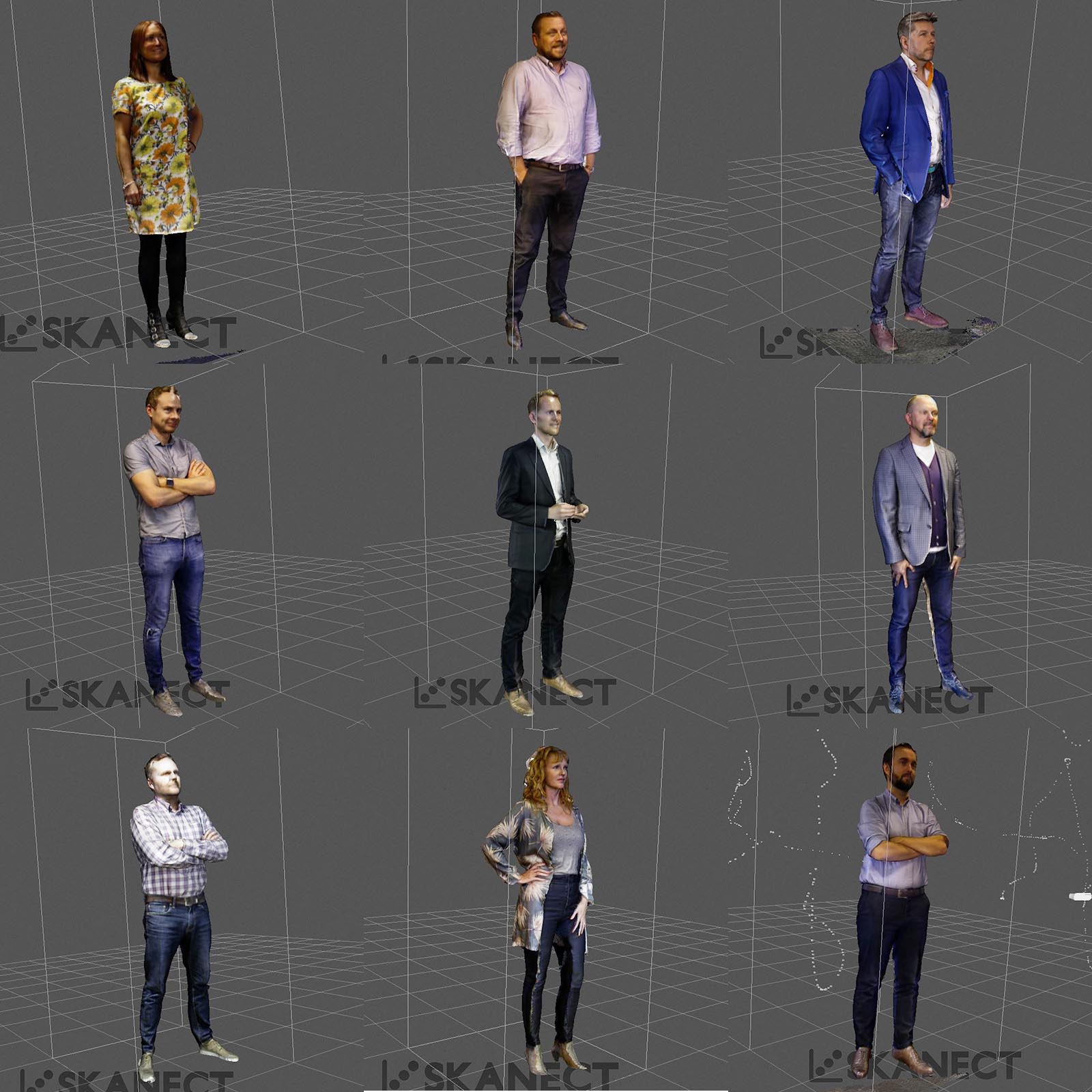
Celebrating the winners of this year's Prolific North Awards!

Do folk shout about success enough? We're not to sure, so we've been busy visiting the Prolific North Awards winners to create a little memento* to continue the magic and fun from the award night!

Part of process to create the memento is to say "hi" to these amazing businesses, and then 3D scan someone from their offices. The response has been amazing, and we've so far met with 9 of the 12 winners, and here's a little glimpse into what we've been doing!

So do you recognise any of the folk from their 3D scan alone? Who would win the trendiest northern business folk?!

This is only the first step to creating the memento*, so be sure to also check out our Instagram account www.instagram.com/punchdigitaluk for more updates to the little side project, as well as our usual visualisation goodness!

Thanks,
Dean

*the memento will be revealed in due course 🙂

03/07/2018 — No Comments

We’re hiring!

We’re looking for a Creative Junior CGI Artist!

Creative, driven, passionate about visualising things? Up for hard graft, pushing the limits and the occasional game of table tennis? We might have the job for you!

What can you expect?

To be paid! £18k plus bonuses and paid overtime.

Work in a creative studio. Situated on the top floor of an old mill, it could do with a lick of paint, but we love it!

Be part of creative and challenging projects, check out our past work.

Learn new skills through personal development. We aim for 4-8 hours per week to keep progressing. We want to explore VR, AR and other new ways to visualise things, and you’d be a part of that development too.

Unlimited holiday. Yep that’s right, life’s too short to miss the important things in life!

Work 9-5 (ish). We know it’s impossible to schedule work and life to the second!

What do we expect?

A good attitude, work ethic and ability to work independently and part of a team.

Forward thinking and an eagerness to learn. We have a good workflow and methodology, but could you help make it better?

An artistic eye for what makes a good visualisation.

A good understanding of 3D modelling in 3D Studio Max. Experience in the Adobe suite. Knowledge of Vray is preferred, but not essential. Learning skills to industry standard will be part of the job.

To be able to work from the studio in Huddersfield (working occasionally from home a possibility).

Bonus if you have skills in lighting, animation, interactive applications, or anything else that would help us visualise things!

Need to be able to make a good brew, training provided if needed!

How to apply?

If you meet the requirements above, then send an email to hello@punch.digital

Do not send attachments, word docs, or boring covering letters. Be creative, sell yourself, don’t be shy!

Simple right? We’ll reply to every email, and if we believe you’re a good match, we’ll invite you in for a brew. You can then see if you actually want to work with us!


Dean

22/12/2017 — No Comments

Our First Project to Mix CGI VR and Live 360 Footage

We love a challenge, so when our friends at Superla came to us and said they want to combine CGI VR with live 360 footage for a distracted driving campaign 360 video we said "hell yes!"

The concept behind the video is simple - distracted driving kills. But how we showed this concept wasn't as easy, and we had to overcome some technical and creative hurdles.

https://www.facebook.com/FordIndia/videos/1599673133417963/

For our part, we produced the car interior, which is entirely CGI! The character is also CGI too. Creating photo-realistic content is something we do on a daily basis, but the challenges of the project pushed our technical knowledge to the limit, and beyond. To seamlessly blend the live footage, with the CGI car interior, we had to match the lighting, but more importantly, the reflections. Then throw in some motion capture, super high resolution footage, and numerous other challenges!

Distracted Driving 360 Car Interior Animation Video

Superla did a cracking job with the live 360 footage, post production and leading and directing the animation. For the character animation, we used the Rokoko motion capture suit, then refined the animation before rendering the animation. I personally love the text message alerts, which divert your eye away from the road, which is of course the video's aim is to distract you as you drive along.

We believe 360 video has a big future, especially when telling an engaging story. By viewing the 360 videos on a VR headset, the immersive experience is unlike any traditional media. I believe in 2018 we will see a growth of VR and 360 content, and it's certainly something we're excited to be a part of!

08/12/2017 — No Comments

Why I Fell Out Of Love With 3D Printing

3D printing, marvelous isn't it?! Well, yes and no. Let me explain.

Firstly, 3D printing is a great piece of technology. The ability to own a 3D printer, and make physical objects is great. And it's great that 3D printing appears "becoming affordable" too.

In the past I thought there was a gap between 3D digital files, and being able to hold the object. As someone who deals with 3D files on a daily basis, I felt that 3D files should have the potential to be physical, touchable, even breakable. And I do still think that way to an extent.

However 3D printing isn't as glamorous, easy or exciting as I had hoped.

I have found there are several drawbacks to 3D printing which I don't think are often discussed -

You need a very good understanding of 3D modelling - This may seem logical, right? But I'm amazed by how many people, businesses and institutions buy 3D printers, but have very little idea how to create the 3D content to actually print. I have been 3D modelling since I was 17, and I still have to use all my knowledge to make something printable. And to create a model, suitable for 3D printing, takes a hell of a long time. My advice wanting to do 3D printing, make sure you have a good understanding of 3D modelling. You need to know how to modelling anything. You'll soon become bored printing primitive shapes and Yoda! And trust me, 3D modelling isn't something you can learn overnight.

You need an even better understanding of 27 pieces of software, a degree in engineering and thermodynamics - OK I exaggerate, but sometimes it does feel like you need know know a hell of a lot to make something very simple. For example, you want to print a desk tidy? OK let's research the size needed and the design. Let's make the 3D file. Then make sure it meets all the requirements to print. Then let's use several pieces of software to make sure the file is printable, and in a format your printer can read.
OK now we can print. GO! Oh wait, that wasn't supposed to happen. Is my design unprintable? Was the printer extruding too hot? Am I using the right filament? Back to stage 2. Now repeat this process a few times, and you might have a desk tidy. Or you could have gone to the stationary store, handed over £5, and saved yourself a few hours.
OK you generally will want to print something that you can't buy, but the same frustrating, tedious process remains!

3D printing isn't fast - Following on from the point above, turning an idea into something useable takes a long time. Don't expect to create something with a good amount of detail in under a day, it just isn't going to happen. The only way to get fast results is to try to create the most efficient workflow as possible. For the 3D Printed Miniature Figures we sell, we have a very tight workflow to make the process profitable. However even after creating 100s of miniatures, things still don't go to plan, and we'll easily lose half a day on something very trivial!
Saying all that, you could view 3D printing as being fast. You don't have to wait for manufacturing, minimum run numbers or even shipping. But in a time when we're used to everything being instant, even the fasted 3D printers can feel slow!

It can be a pricey hobby - 3D printers have a huge price range, from £300.00 for a budget desktop printer, to £100,000+ for an industrial grade printer. Here I'm generally talking about the lower end of the price range, definitely sub £5000.00 anyway. An Ultimaker 2, one of the most common and universally known 3D printers, is still £2300.00! That's a lot of cash, especially if you have no commercial use for one. I am surprised the price hasn't dropped a lot more over recent years.
Also maintaining and servicing can add to the cost too. If, or should I say when, something goes wrong, it's going to cost. OK sometimes it might be a £10 part, but it could easily be a lot more if these temperamental machines decide to properly break!

Finally, you'll need time, lot of time - This is perhaps the reason why I'm currently out of love with 3D printing. 3D printing seems to eat up so much time. Whether it's learning the software, tinkering with settings to perfect a print, or disassembling the extruder to remove a blockage, the whole process is time intensive. Perhaps 3D printing is still relatively new, therefore a lot of manual work is still required, but really it doesn't appear to be getting any easier. Maybe I'm inpatient, but if my bike needed as much attention then I'd be hopping on the bus!

So until someone creates a 3D printer offering maintenance free, no set-up require with guaranteed quality, then expect to spend a lot of time scratching your head, googling words you didn't know exist, and swearing at lost allen keys!

Dean

07/11/2017 — No Comments

Motion Capture Fun with the Rokoko Suit

Work should be fun right? So when we have the chance to have a go with a new bit of kit, and it really makes us smile, we know we're doing something right!

As part of a new project with Superla, we had chance to have a go with the Rokoko Motion Capture Suit!

This is very nice bit of kit indeed. In a nut shell, the Rokoko suit records the actors movement, which can be re-applied to a virtual character. Motion capture is often used in films and gaming as a way to simulate realistic movements, and it does a very good job. Check out this clip about how motion capture was used in the Pirates Of the Caribbean films.


Motion Capture Suit Rokoko

Stuart from Superla, capturing some questionable driving.

As I've mentioned, he process of motion capture isn't anything new, the technology has been around for decades. However the suit contains new technology, meaning that motion capture process totally different from what came before. Usually to do motion capture, you'd have to hire a studio which was specifically design and equip for motion capture. This is both expensive and very restrictive.

The Rokoko suit doesn't need a studio, all the motion sensors are built into the suit, meaning you can capture motion almost anywhere. All you need is the suit, a laptop and wi-fi.

Motion Capture Suit Rokoko

Data captured and applied to a virtual character.

But what makes it fun? There are several reasons as to why I strangely consider this fun. I love new tech, especially when it's affordable, so that's the first point. I'm always drawn to affordable tech, from 3D printing to 360 cameras.

I also think it's brilliant that you can do something very technical anywhere, and see the results right in front of your own eyes. OK you have to edit, refine and make changes to the data, but the instant feedback is great. The laptop we used wasn't anything spectacular either, so the guys who developed the Rokoko really haven't alienated themselves from a lot of users.

Generally the whole experience is easy and straight forward. No one likes a clunky process, or un-intuitive piece of software.

Motion Capture Suit Rokoko

And of course there's the skin tight suit, always worth a laugh right?!

Over the next few weeks, we should be able to show you what we used the Rokoko motion capture suit for. It's quite a unique project, mixing motion capture, 360 video, and some dodgy driving!

Dean

LIKE WHAT YOU SEE?

WANT TO KNOW MORE?

USEFUL LINKS

Site Map
Privacy Policy

Punch Infinity
Switch
Archive
Contact
Subscribe

INSTAGRAM FEED

Wrong or no access token.

PUNCH DIGITAL

Punch Digital Services Ltd

Registered Office :
Peel Walker
11 Victoria Road
Elland
HX5 0AE

Company No:
07938732

VAT No:
GB 282 4398 77